Inbound and Outbound Network Security
Network security in an enterprise data platform can be
viewed from two perspectives: inbound and outbound
connectivity.
-
Inbound network security controls who and
what can access the platform, helping ensure that only
trusted users, devices, or networks can connect.
-
Outbound network security, on the other
hand, governs how the platform communicates with external
services, restricting data movement to approved
destinations and reducing the risk of data exfiltration.
Together, these controls reduce the platform's attack
surface, strengthen data protection, and support a Zero
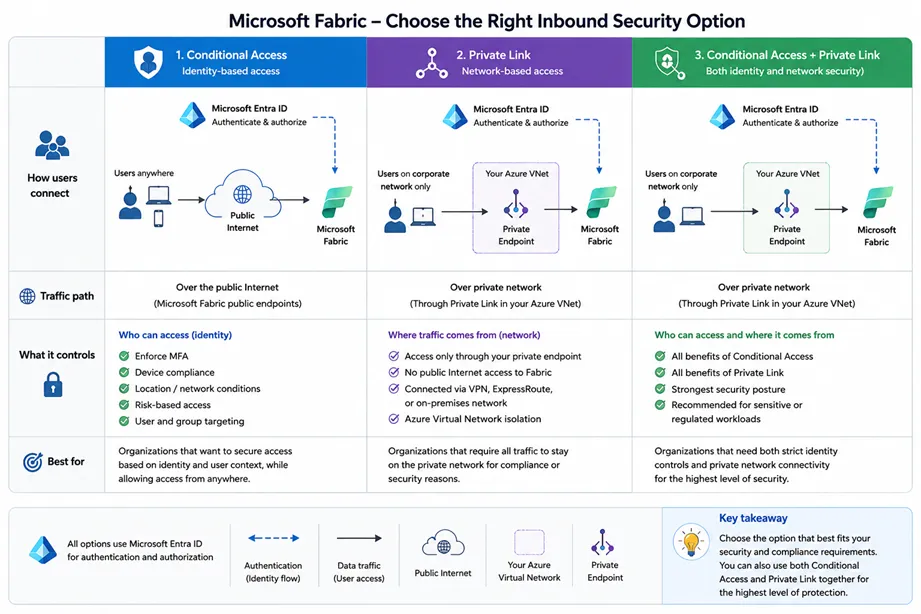
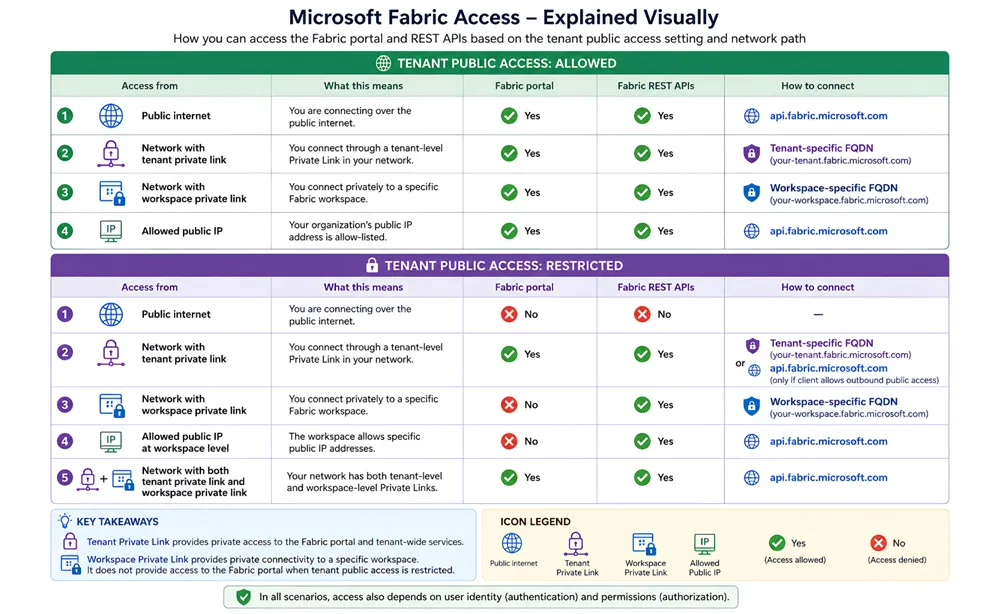
Trust security approach. The following illustration explains
the options available to secure your workspaces from the
inbound traffic.
Private Link and Private Endpoints
A Private Link is the technology/platform that enables
Private Endpoints and Private Link Services. A Private
Endpoint is a network interface inside your subnet that
gives an Azure PaaS service (e.g., Storage, SQL) a private
IP from your VNet.
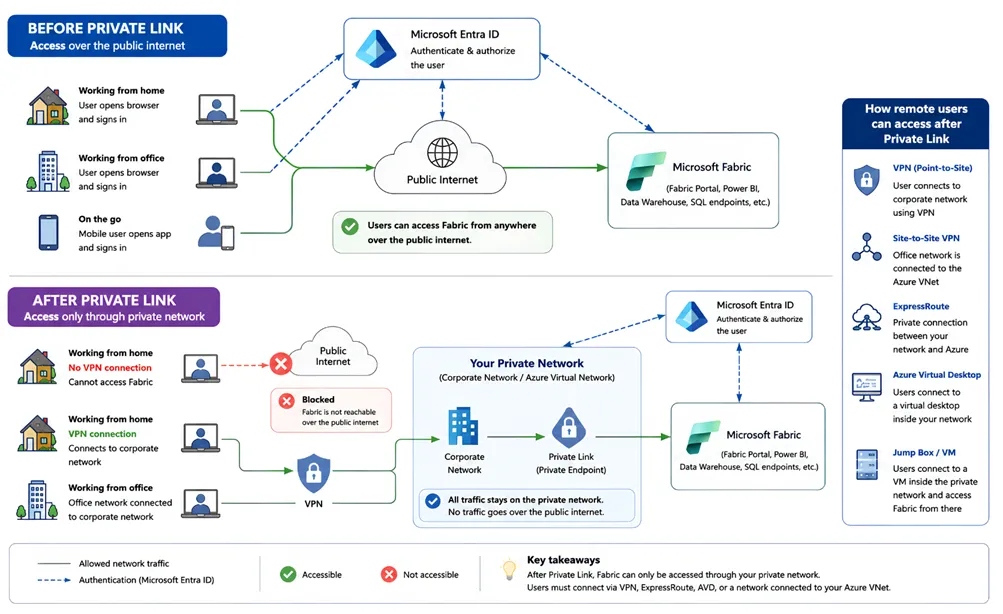
By default, Microsoft Fabric is accessed over the public
internet. Although access is protected by strong identity
and security controls such as Microsoft Entra ID,
Multi-Factor Authentication (MFA), and Conditional Access,
the service remains reachable through its public endpoints.
Enabling Private Link changes this by providing private
connectivity between your network and Microsoft Fabric over
the Microsoft backbone network. This removes the need for
public internet access to Fabric, significantly reducing the
attack surface while allowing organisations to enforce
stricter network isolation without changing the user
experience for authorised users.
Admin Settings for Inbound Network Access
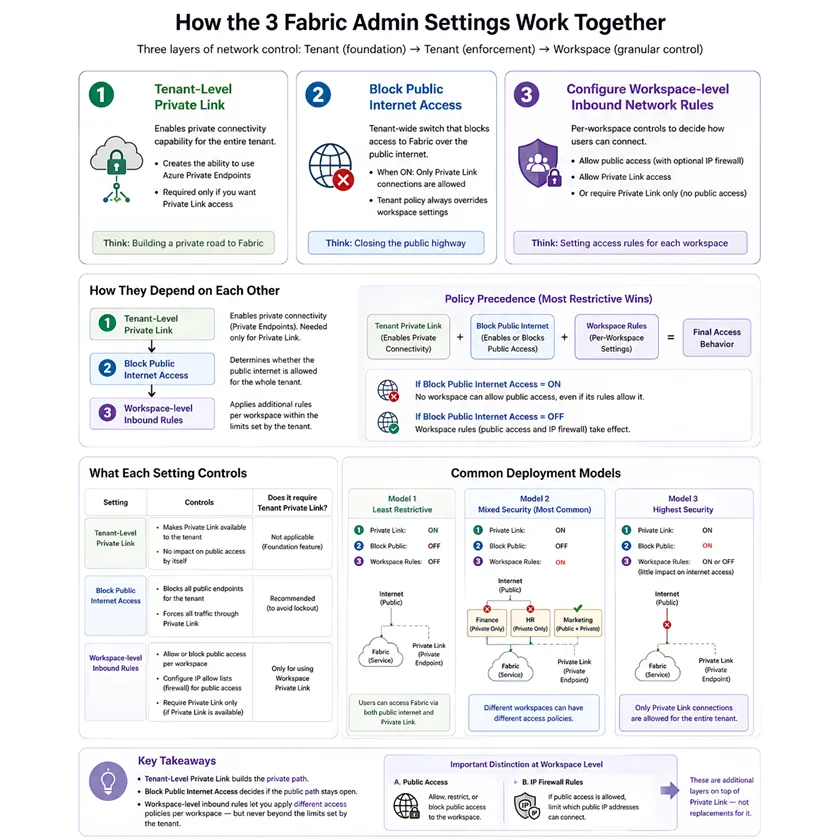
Microsoft Fabric provides three key admin settings that work
together to control inbound network access to the platform:
-
Tenant-Level Private Link establishes
private connectivity between your organization's network
and Microsoft Fabric.
-
Block Public Internet Access prevents
users from accessing Fabric through its public endpoints,
ensuring connections occur only through approved private
network paths.
-
Configure Workspace-Level Inbound Network
Rules allows administrators to define network
access policies for individual workspaces, enabling
different levels of protection based on business,
security, or compliance requirements.
Together, these settings provide a flexible, layered
approach to securing inbound access while allowing
organizations to adopt network isolation at their own pace.
Access to the Fabric Portal
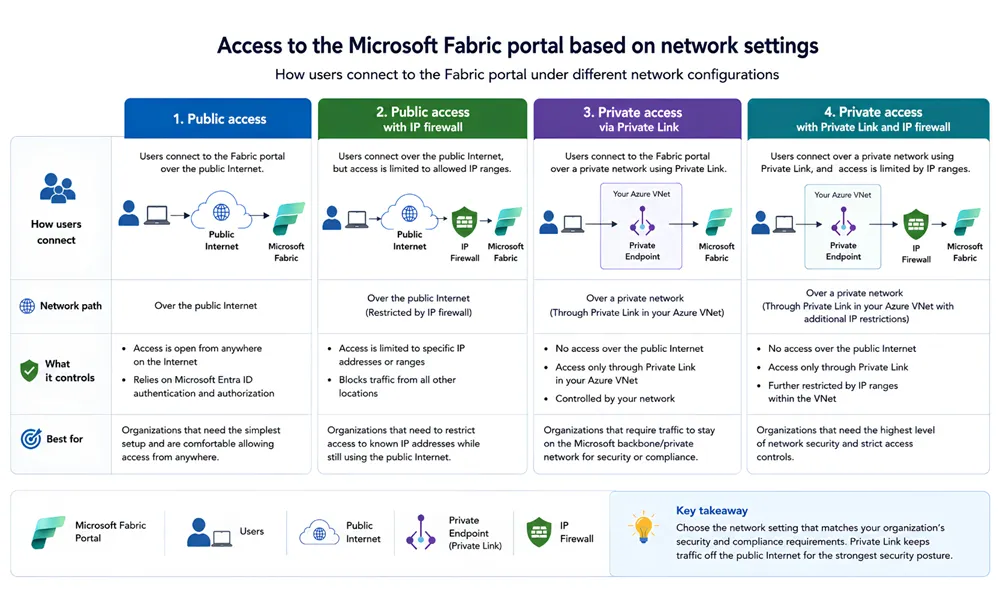
Access to the Microsoft Fabric portal depends on how an
organisation's network security settings are configured.
Organisations can choose to allow access over the public
internet, restrict access to specific workspaces, or require
all connections to use private network paths through Private
Link. As these settings become more restrictive, users must
connect from approved networks to access the portal and its
resources. This flexible approach allows organisations to
balance accessibility with security, implementing the level
of network protection that best aligns with their business
and compliance requirements.
Blocking Public Internet Access
The Block Public Internet Access setting prevents users and
applications from accessing the Microsoft Fabric portal and
its public APIs over the internet. Once enabled, requests
made through Fabric's public endpoints are denied, requiring
users to connect through approved private network paths,
such as a configured Private Link. This significantly
reduces the platform's exposure to the public internet,
helping organisations enforce stricter network isolation
while continuing to rely on Microsoft Entra ID and other
identity-based security controls for authentication and
authorisation.
Considerations for Private Endpoints
There are several considerations to keep in mind while
working with private endpoints in Fabric. Private Link is a
security feature, not a feature-enablement feature. The
limitations are intentional because some Fabric features
currently depend on Microsoft services that still
communicate over public endpoints. Microsoft is gradually
adding Private Link support to more services.
What's Next?
This article focuses on inbound network security in
Microsoft Fabric. In a separate upcoming article, we'll
explore outbound network security, including how Microsoft
Fabric securely connects to external services, controls
outbound traffic, and helps organizations reduce the risk of
data exfiltration while enabling secure access to the
resources their workloads depend on.
Need Help Securing Your Data Platform?
At DATA LEAGUE, we help organisations design and implement
secure, well-governed data platforms on Microsoft Fabric.
Contact us today
to discuss how we can help you strengthen your network
security and data governance posture.